

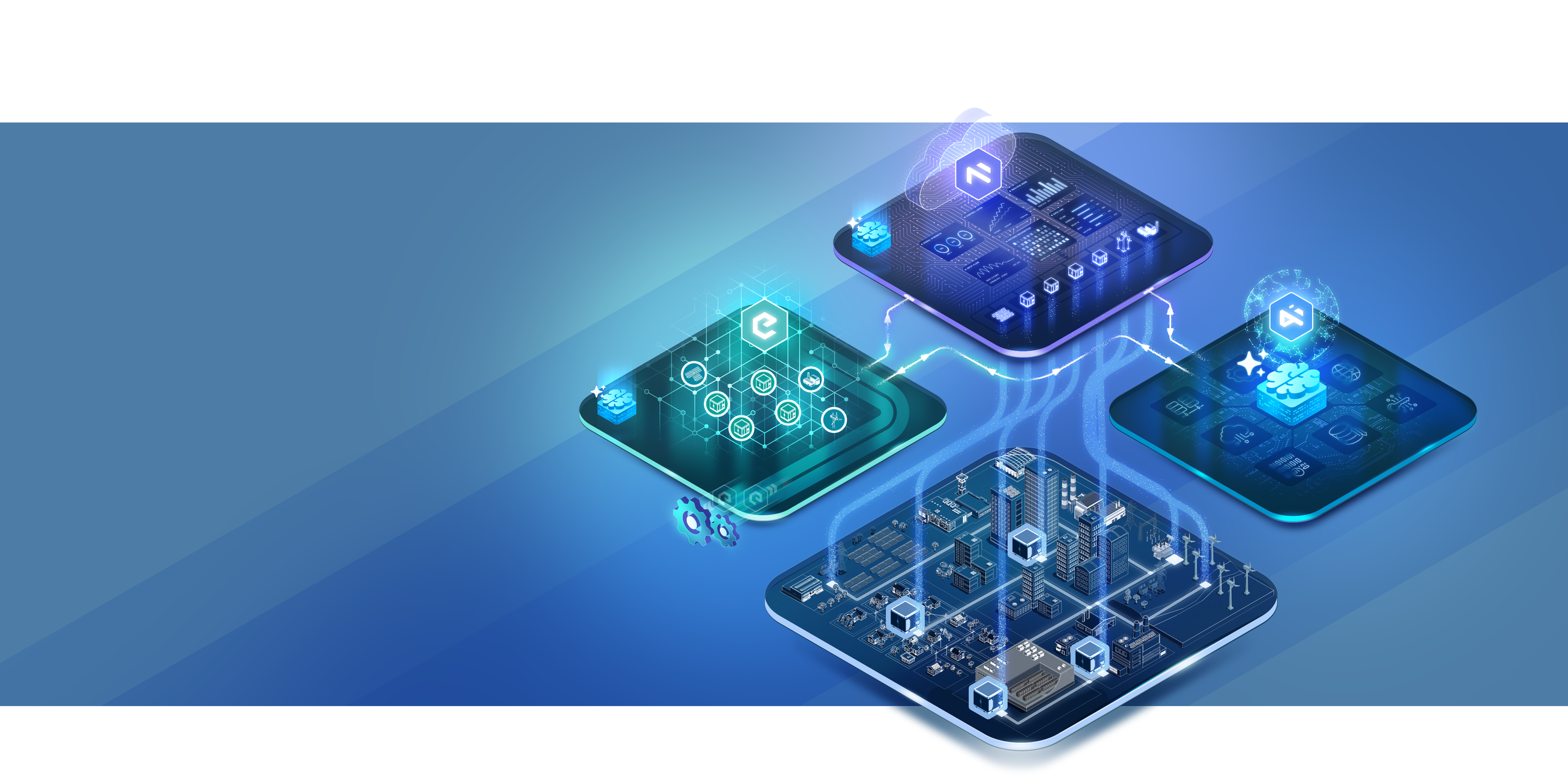
Edge-to-edge grid orchestration
One platform that delivers grid balancing services and active control of distribution networks.
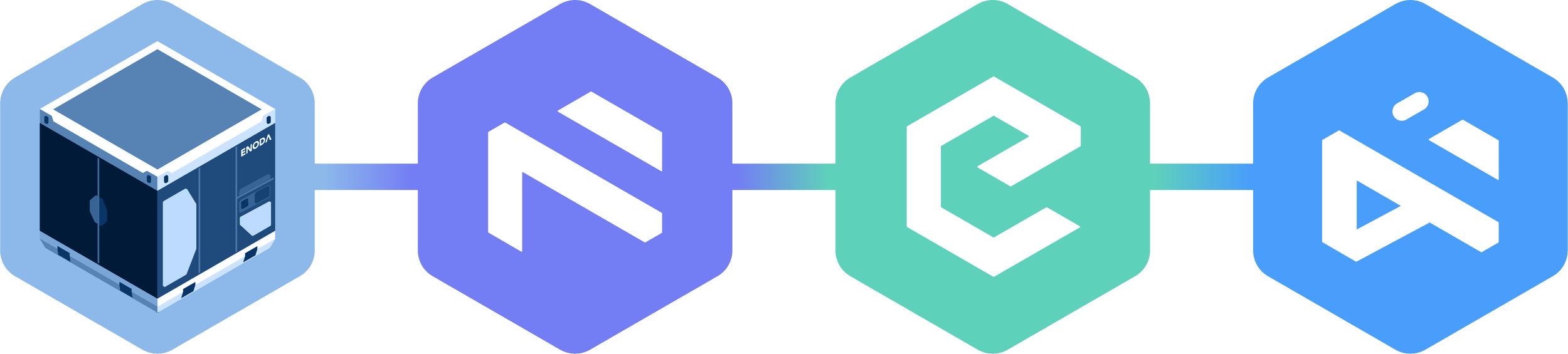
THE ENODA PLATFORM
Continuously improving the energy system
The components of the ENODA platform work together to improve the state of the energy system, both locally and across the grid.
First, the platform measures the state of the grid. Based on previous learnings, possible future states can be inferred, and then resources can be dispatched that will produce the desired state. Finally, the effects of those actions are measured and used to guide future inference.
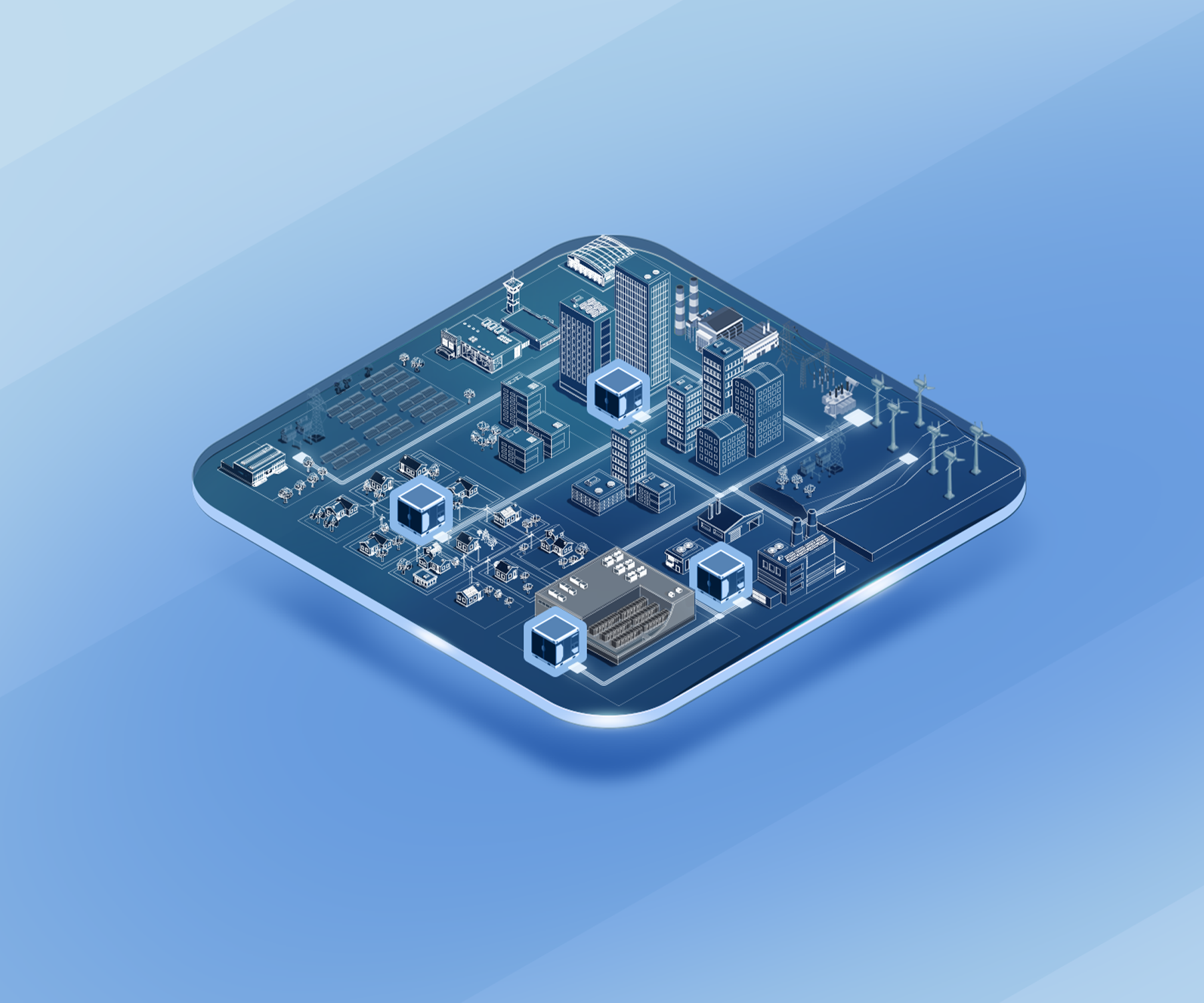
Network interface
Enoda PRIME Exchanger
Optimises the LV-network power signal, and regulates power flow to provide grid frequency and ancillary services.
Dynamic voltage control increases network capacity for renewables
Network power flow control
Grid-edge telemetry and intelligence
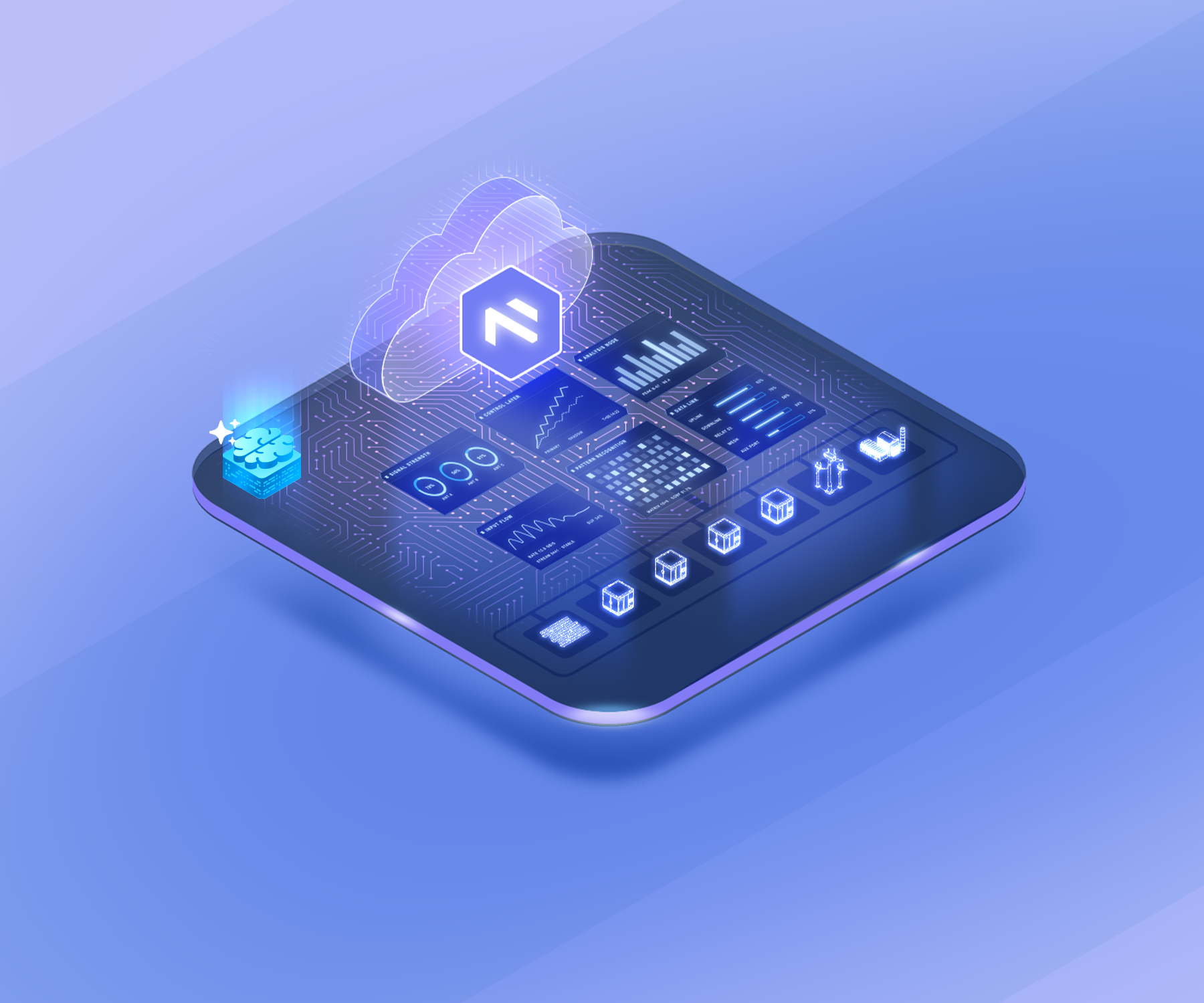
Digital interface
Nodal Asset Management
Interfaces PRIME Exchanges and other network hardware to the ENODA platform and DSO control systems.
Universal infrastructure interface
Distribution network digitalisation
Monitor and control interface

Grid-wide coordination
Enoda ENSEMBLE™
Coordinates energy resources for grid stability based on guidance provided by NODAL INTELLIGENCE.
Asset coordination and dispatch
Validation and settlement
Shared, tamper-evident records

Distributed intelligence
NODAL INTELLIGENCE
Continuously learns grid behaviour and guides ENSEMBLE to proactively deliver grid stability services.
Predictive energy system optimisation
Grid-edge energy intelligence
Distributed compute and inference services
INTELLIGENCE
The value of grid-edge intelligence and inference

Predictive optimisation
Real-time data feeds the intelligence engine that infers the future state of the grid, which the platform uses to proactively manage energy resources.
Energy system intelligence
The ENODA platform generates grid-edge data that is used for growth planning, economic analysis, and energy system monitoring.
Decentralised inference
The distributed platform architecture spreads the intelligence and grid load, and mitigates the problems caused by centralised control systems.